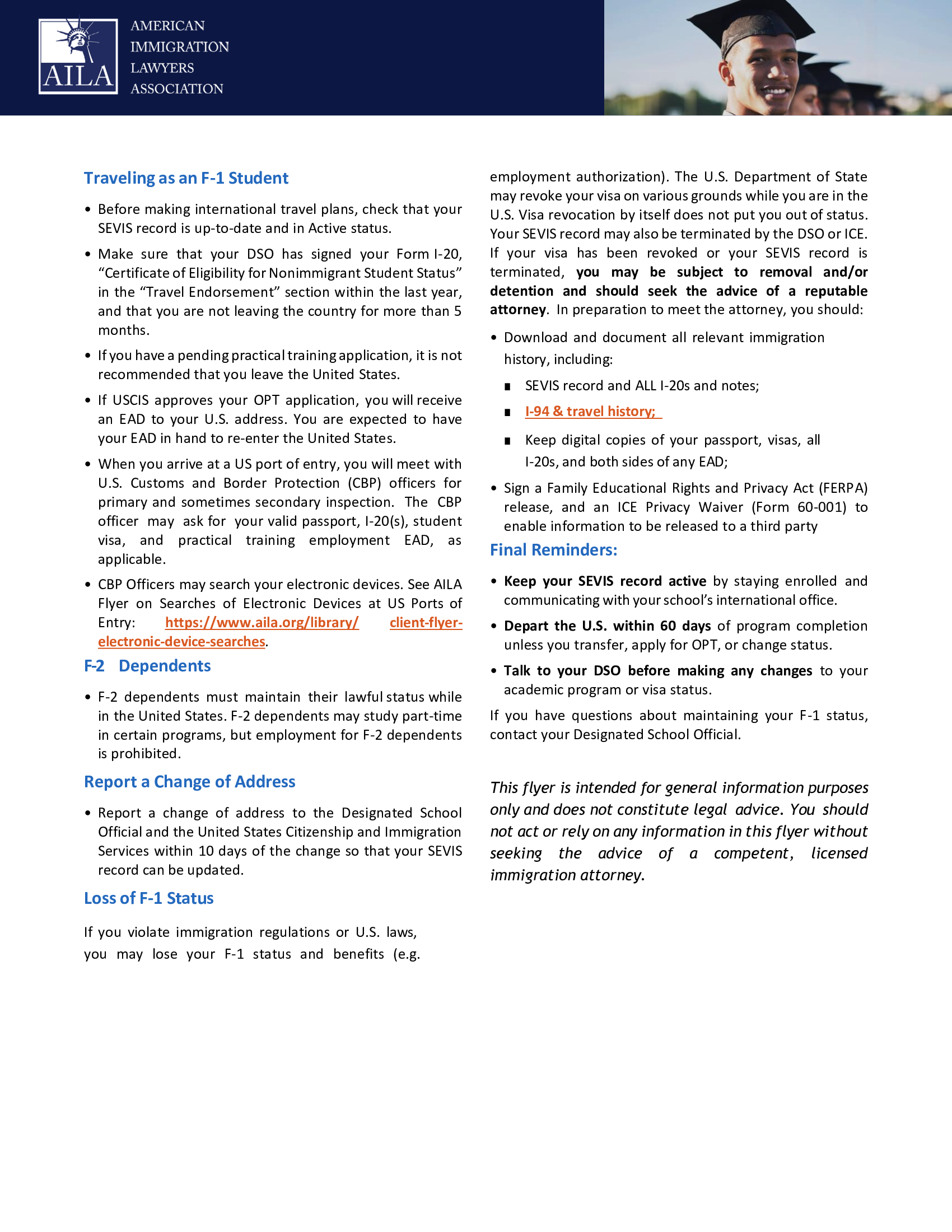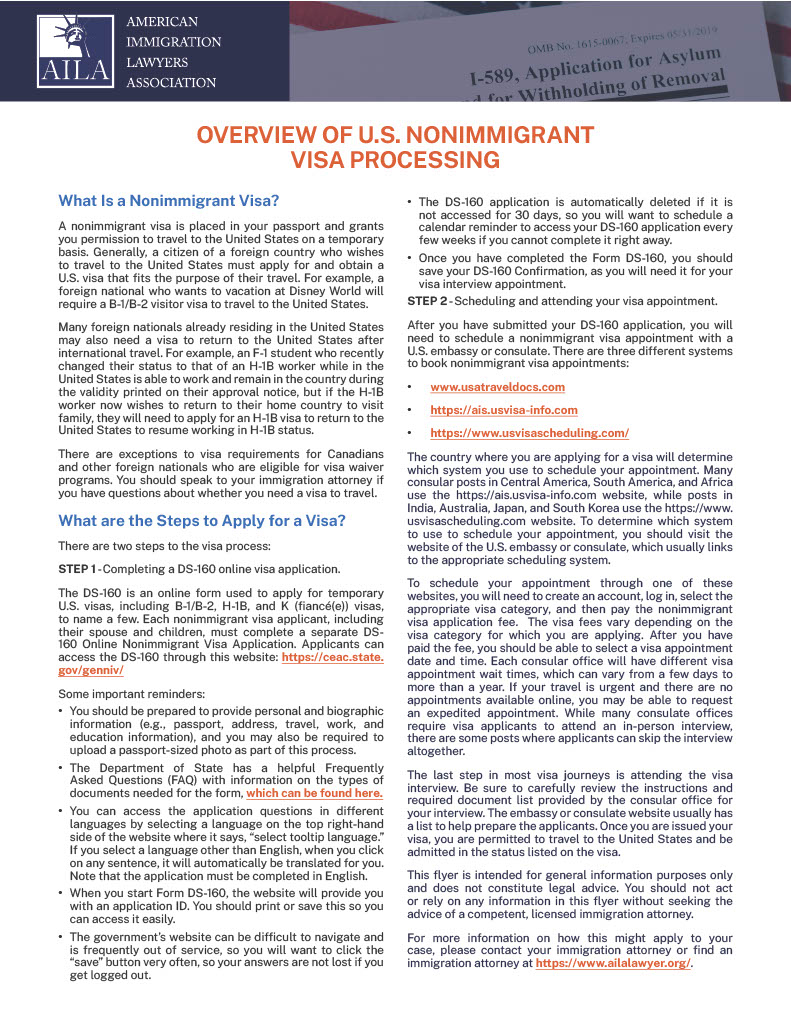

Duration of Status for F, J, & I Visas Ends on September 15, 2026

The Department of Homeland Security (DHS) issued a final rule that significantly changes how F-1 students, J-1 exchange visitors, and many I media visa holders maintain lawful status in the United States. Previously, these individuals were generally admitted for “Duration of Status” (D/S). Under the new rule, they will instead receive fixed periods of admission, typically limited to the program end date and generally not exceeding four years.

DHS emphasizes that the four-year period is intended as a law enforcement and screening tool to assess whether a student is maintaining normal academic progress and eligibility for F-1 status.

Key Changes to Duration of Status

  • Fixed Admission Periods: F and J nonimmigrants will no longer be admitted for Duration of Status. Maintaining status will depend on the expiration date on the individual’s I-94 record, not solely on SEVIS program dates.
  • Extension Applications Required: Students and exchange visitors whose programs extend beyond four years will need to file an Extension of Stay application with USCIS before their authorized stay expires.
  • Shorter F-1 Grace Period: The post-completion grace period for F-1 students has been reduced from 60 days to 30 days, requiring earlier planning for departure, transfers, or changes of status.
  • Dependent Family Members Affected: When family members file extension applications together, the approved stay for all applicants may be limited by the family member with the shortest eligible period, such as the earliest passport expiration date.
  • New Rules for I Visa Holders: Most foreign media representatives will be admitted for a maximum of 240 days rather than D/S and may need to file extension requests or depart and reenter the United States to continue their activities,

Additional Changes applicable to F-1 and J-1 nonimmigrant

  • The F-1 student who timely files an EOS may continue pursuing their full course of study after the expiration of the admission period until USCIS adjudicates the EOS application.
  • Generally, an F-1 student must complete their first academic year of a program at the school that initially issued their I-20.
  • The rule prohibits F-1 students at the graduate level from changing educational objectives at any point during their program of study. “Educational Objectives” refers to a student’s education level or major.
    • Prohibits F-1 students at the graduate level from transferring at any point during their program of study, unless an exception is authorized by SEVP for extenuating circumstances.
  • F-1 students must progress to higher educational levels and are prohibited from changing to the same or a lower educational level while an F-1 student.
  • J-1 nonimmigrants who are employment authorized with a specific employer incident to status can continue to be authorized for such employment for up to 240 days if their status expires while their timely filed OES application is pending.
    • J-2 dependents must apply for an EAD do not have continued work authorization once their EAD expires.
    • J-1s whose D/S status expires shortly after the rule takes effect can file an EOS and continue to work for the duration of the time on their new DS-2019 regardless of how long USCIS takes to adjudicate the EOS application.
  • The EOS application will require evidence of sufficient funds to cover expenses for the extended period of time.

Transition Period

  • The transition period can last up to 4 years for students who were admitted for D/S prior to the rule’s effective date and are properly maintaining F and J status on 9/15/2026.
    • During this transition period, F or J nonimmigrants in D/S on 9/15/2026 do not need to have their I-94 corrected to a date certain, provided they continue their studies appropriately.
    • They can continue in D/S until the program end date in their I-20 or DS-2019 or 4 years after 9/15/2026, whichever comes first. They remain entitled to the 60-day grace period as part of the transition period.
    • Should they travel abroad during this period, they will be issued a new I-94 with a date certain upon their return.
  • F-1 students with D/S who have filed Form I-765 for post-completion OPT or STEM OPT on or before March 18, 2027, will not have to file an EOS. If the F-1 has a date-certain I-94, they have to file the I-765 and the EOS application.

Unlawful Presence (ULP) After Duration of Status

  • Calculation of the accrual of ULP resulting from the elimination of D/S will not be applied retroactively, but for those with completed programs and expired I-20s, ULP will begin to accrue on 9/15/2026 unless they have applied prior to 9/15/2026 for reinstatement, a change of status, or an EAD for OPT or STEM OPT.

______________

These are highlights only from the new rule. We will update the website as more information becomes available. If you are an F-1 or J-1 nonimmigrant, work closely with your DSO regarding your status and seek advice from immigration counsel when needed.
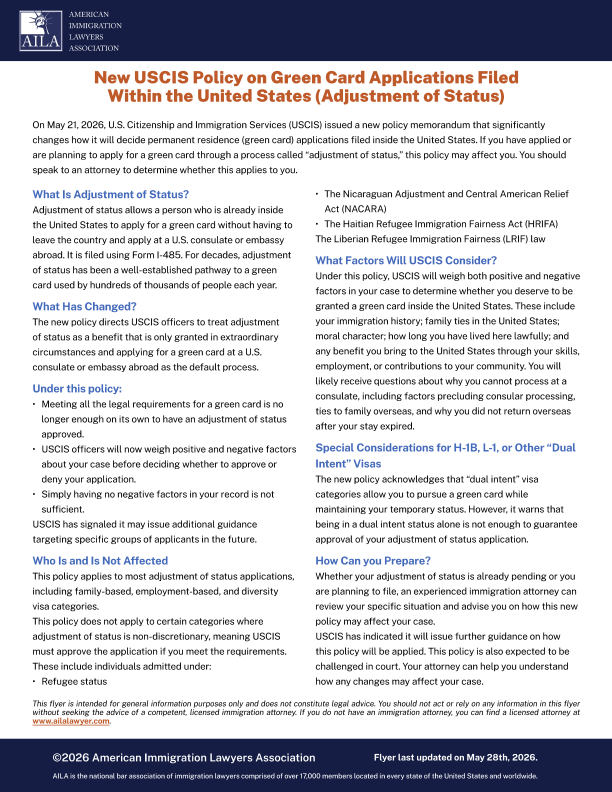
Alien Registration Requirement Goes Into Effect April 11, 2025

The following categories of persons who already fulfilled the alien registration requirement:

  • Lawful permanent residents;
  • Aliens paroled into the United States under INA 212(d)(5), even if the period of parole has expired;
  • Aliens admitted to the United States as nonimmigrants who were issued Form I-94 or I-94W (paper or electronic), even if the period of admission has expired;
  • All aliens present in the United States who were issued immigrant or nonimmigrant visas before their last date of arrival;
  • Aliens whom DHS has placed into removal proceedings;
  • Aliens issued an employment authorization document;
  • Aliens who have applied for lawful permanent residence using Forms I-485, I-687, I-691, I-698, I-700, and provided fingerprints (unless waived), even if the applications were denied; and
  • Aliens issued Border Crossing Cards.

Those who have NOT registered include:

  • Aliens present in the United States without inspection and admission or inspection and parole who have not otherwise registered (that is, aliens who crossed the border illegally);
  • Canadian visitors who entered the United States at land ports of entry and were not issued evidence of registration (i.e., Form I-94); and
  • Aliens who submitted one or more benefit requests to USCIS not listed in 8 CFR 264.1(a), including applications for deferred action or Temporary Protected Status who were not issued evidence of registration listed in 8 CFR 264.1(b).

If you fall into the “Who is not registered?” section above, then you must comply with the alien registration requirement. This includes:

  •  All aliens 14 years of age or older who were not registered and fingerprinted (if required) when applying for a visa to enter the United States and remain in the country for 30 days or longer. They must apply before the expiration of those 30 days;
  • The parents or legal guardians of aliens younger than 14 years of age: Parents or legal guardians must apply for the registration of aliens younger than 14 years of age who have not been registered and remain in the country for 30 days or longer, before the expiration of those 30 days; and
  • Any alien, whether previously registered or not, who turns 14 years old in the United States within 30 days after their 14th birthday.

All foreign nationals 18 years of age and over in the United States must comply with the alien registration requirement. This includes those who registered using this new process and must carry the evidence of their registration in their possession at all times. Moreover, all foreign nationals in the United States required to register must report a change of address to USCIS within 10 days of moving. Instructions can be found here: https://www.uscis.gov/addresschange.

PLEASE NOTE: The alien registration requirement DOES NOT provide a legal immigration status or work authorization.

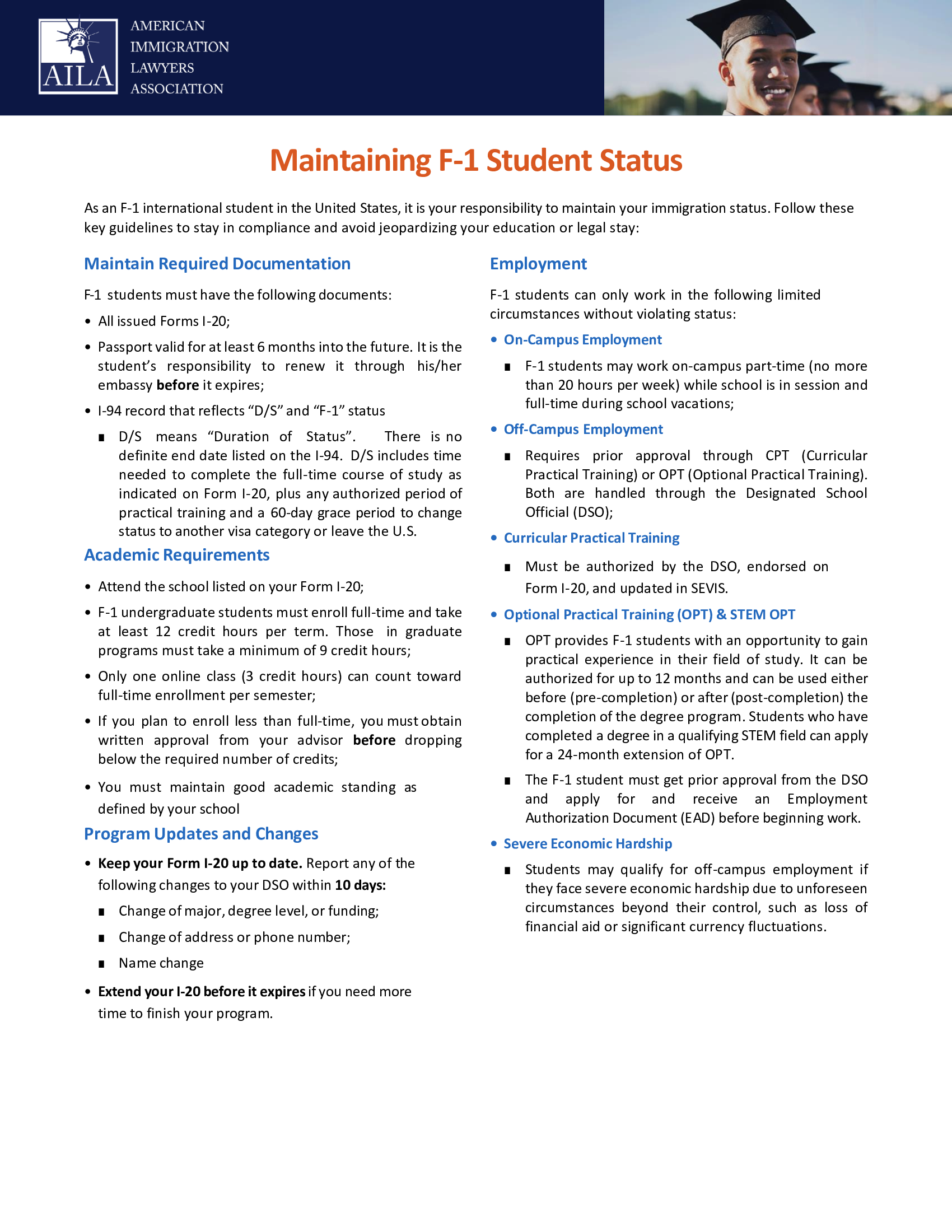
H-1B Cap Registration Information for FY 2026

TRAVEL WARNING

International travel for nonimmigrants is potentially risky until we have more clarity on visa processing and the inspection and admission processes under the Trump Administration. Consequently, if you need to apply for a new visa, such as an H-1B, to return to the U.S., consider postponing your trip.

FY 2026 H-1B CAP REGISTRATION INFORMATION

USCIS announced that the initial registration period for FY2026 H-1B cap subject petitions will open at noon Eastern on March 7 and close at noon Eastern on March 24. USCIS intends to notify those selected in the lottery by March 31. The registration fee this year is $215.

Employers must use a USCIS online account to register each beneficiary for whom they wish to file an H-1B petition. Employers can create an account here: https://my.uscis.gov/ and information can also be found here: https://www.uscis.gov/organizational-accounts-FAQ.

If you are an employer who had an H-1B registrant account for the FY 2021– FY 2024 H-1B registration seasons, but you did not use the account for FY 2025, your existing account will be converted to an organizational account after your next log in. First-time registrants can create an account at any time.

How to Find the Best Immigration Attorney for Your Needs

During the immigration process, you’ll be required to fill out quite a bit of paperwork. You’ll also have to file that paperwork, prepare for complicated situations, deal with immigration officials and handle several smaller tasks – and the process can be difficult, especially if you’ve never done it before. For most people, that means finding the best immigration attorney they can. Here’s how you can do that, too.

How to Find the Best Fort Worth Immigration Attorney for Your Needs

When you’re searching for an immigration attorney, you may be looking for someone who has certain characteristics. Maybe you want someone who’s quick to return your phone calls; perhaps you want a lawyer who’s known for efficiency. No matter what you’re looking for, though, here’s how you can find the best immigration attorney for your needs:

  • Make sure the attorney you’re interested in working with is a member of the American Immigration Lawyers Association
  • Interview your potential attorney
  • Check the attorney’s credentials

Here’s a closer look at each step.

#1. Check AILA Best immigration attorney - Susan E. Lane

The American Immigration Lawyers Association is the only legal association in the U.S. that’s specifically for immigration attorneys. Because it has limited membership – only 15,000 attorneys across the U.S. are part of it – it’s a great way to ensure that the attorney you’re working with is the right kind of professional for you. (You can view Susan E. Lane’s profile on AILA here.)

#2. Interview Your Attorney

It’s always okay to interview an attorney before you make a hiring decision. Call to schedule a consultation where you can ask things like:

  • How many cases like mine have you handled in the past?
  • How long have you been practicing immigration law?
  • Is a significant portion of your practice dedicated to these types of cases?
  • What are the possible outcomes of my case?
  • What’s the best way to communicate with you?
  • How will you keep me updated on my case?
  • What is your fee structure like?

The attorney’s answers to these questions – as well as to any case-specific questions you have – will help you make a determination. Ideally, your lawyer will have significant experience in the areas where you need help, such as family immigration or employment-based immigration.

#3. Check Credentials

Look for an attorney who has a wide range of experience and the credentials necessary to make you feel comfortable. For example, membership in organizations such as the American Immigration Lawyers Association can tell you that an attorney is dedicated to this area of law specifically. You also want an attorney who holds membership in prestigious organizations such as the State Bar of Texas, the Tarrant County Bar Association or other associations.

Do You Need to Talk to an Immigration Attorney?

If you need to talk to an immigration attorney, we can help. We’ll be happy to answer your questions and talk about possible outcomes of your case. Call us today to schedule your consultation – you’ll be glad you did.